Le Lab
The LAB explores a new way of building exhibitions by placing sustainability, experimentation and creativity at the center of the process. Inspired by the idea of a laboratory, the project invites visitors to step inside a space of exploration where materials, ideas and innovations are tested and shared. The entire environment is conceived as a modular ecosystem where brands, startups and designers coexist, exchange and present their work within a flexible and evolving structure. Cardboard becomes the protagonist of the project. Lightweight, recyclable and surprisingly expressive, it is used not only as a construction material but also as a design language.
The LAB explores a new way of building exhibitions by placing sustainability, experimentation and creativity at the center of the process. Inspired by the idea of a laboratory, the project invites visitors to step inside a space of exploration where materials, ideas and innovations are tested and shared. The entire environment is conceived as a modular ecosystem where brands, startups and designers coexist, exchange and present their work within a flexible and evolving structure. Cardboard becomes the protagonist of the project. Lightweight, recyclable and surprisingly expressive, it is used not only as a construction material but also as a design language.
Exhibition Design
Le Lab
Material Experimentation
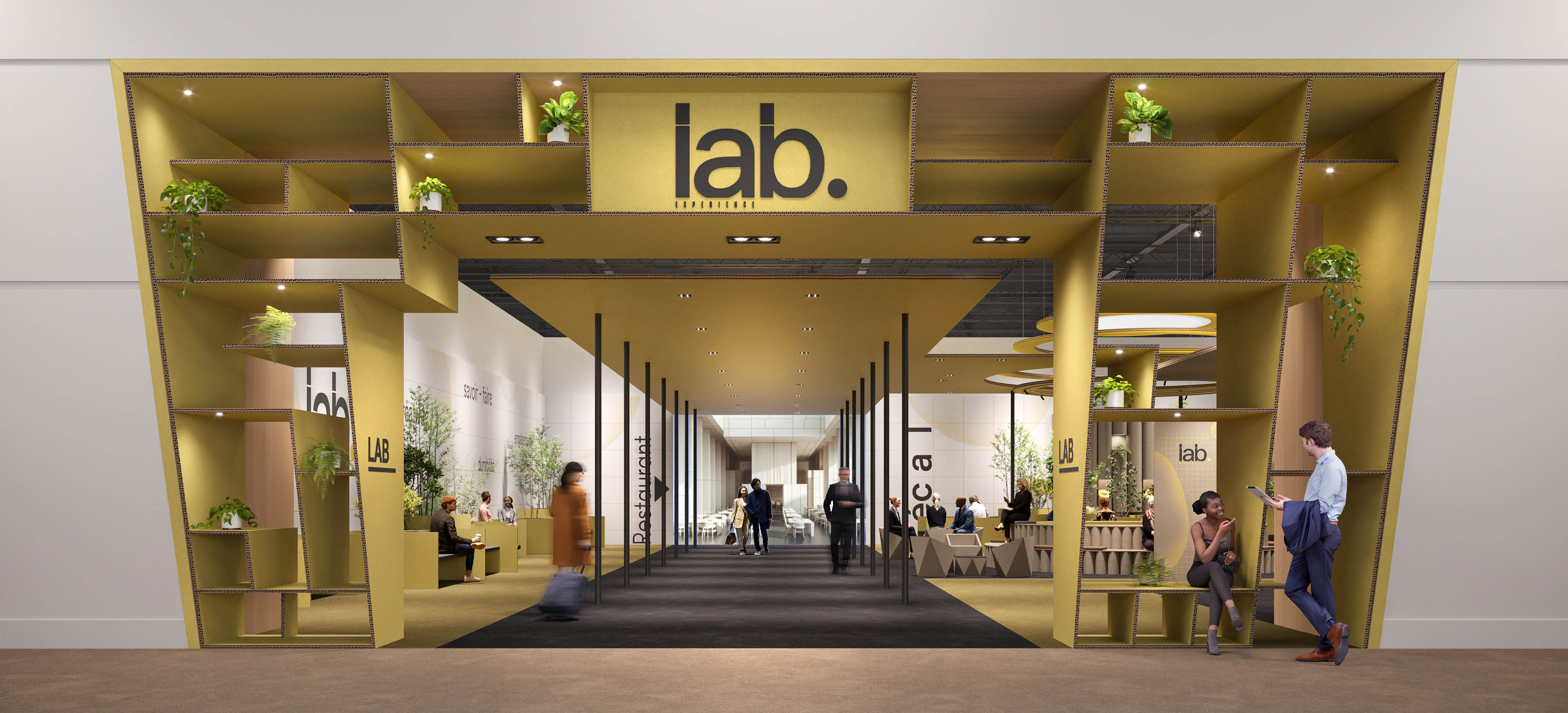
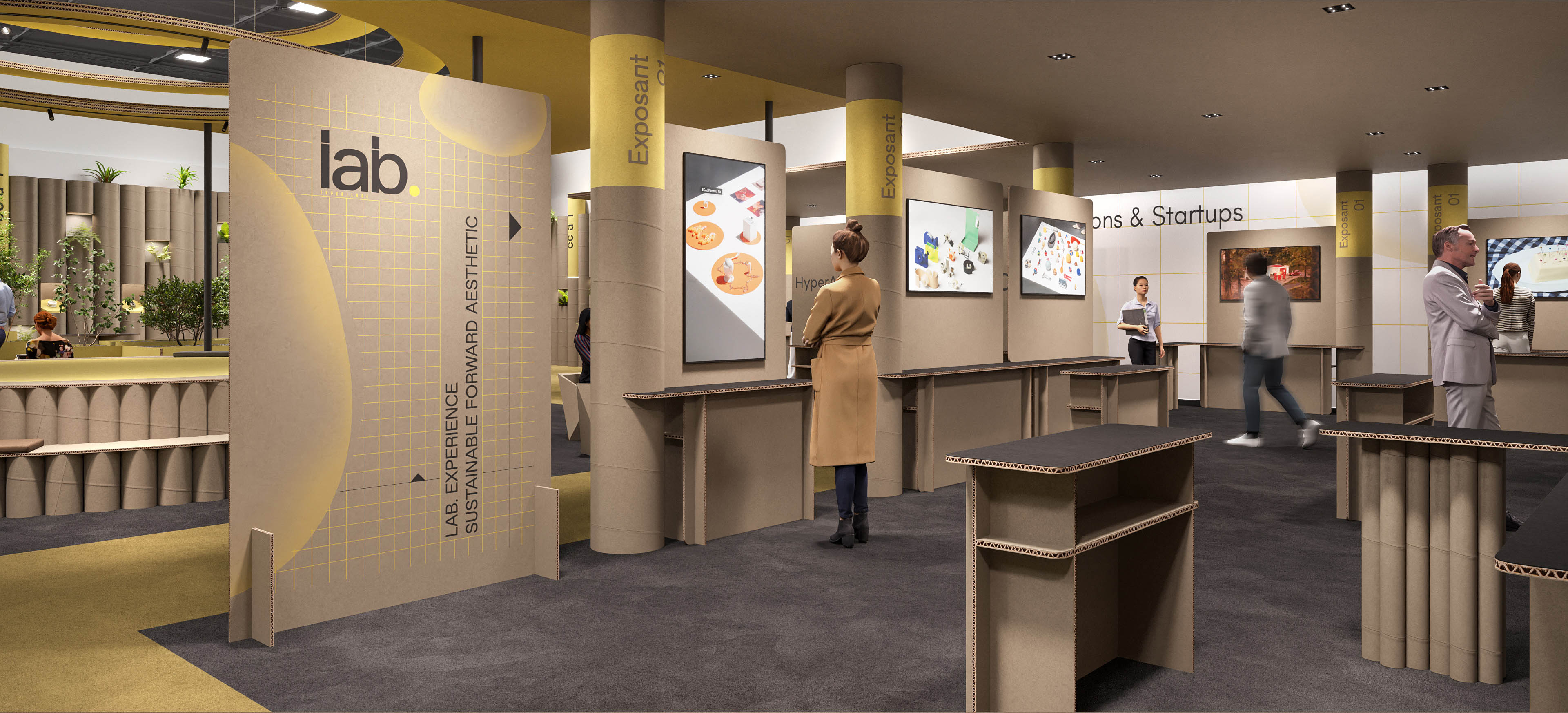
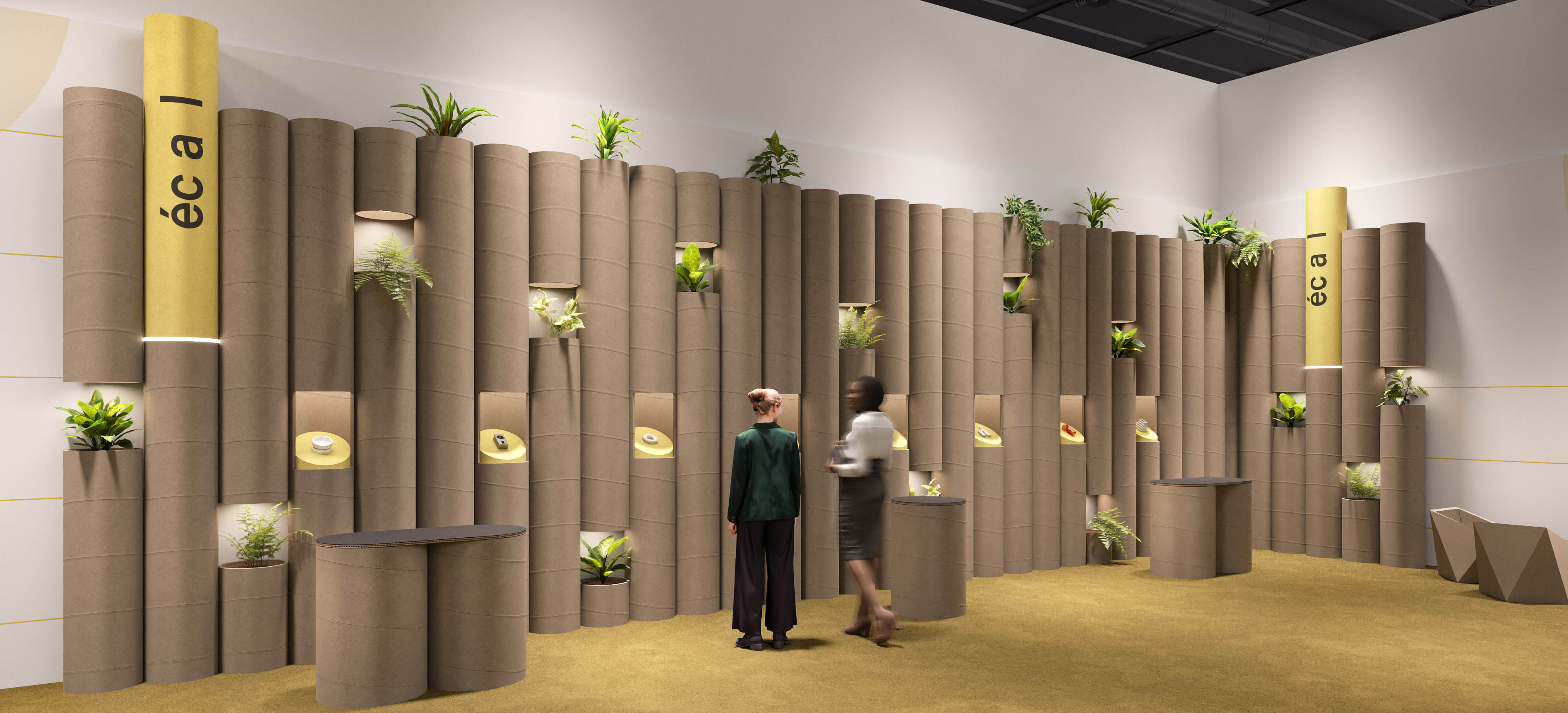
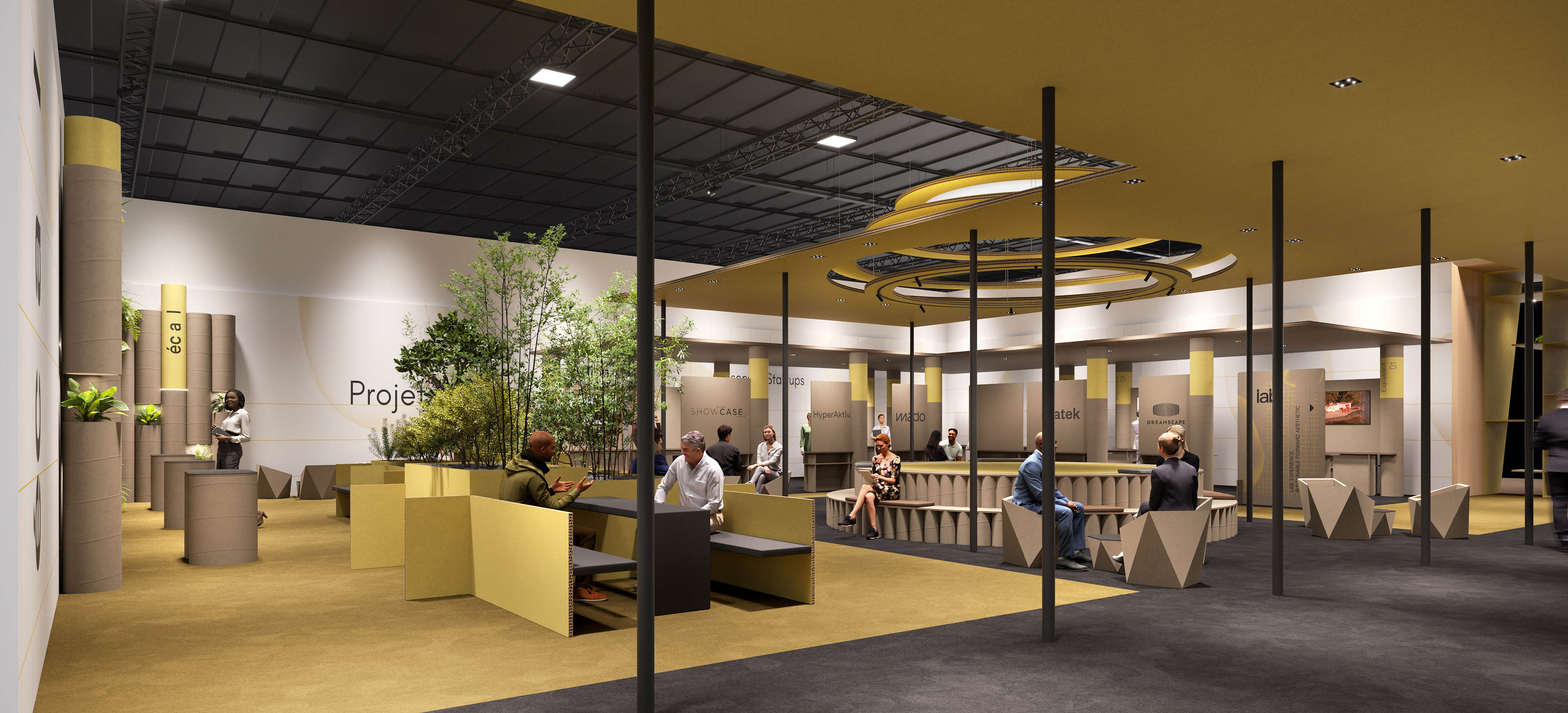
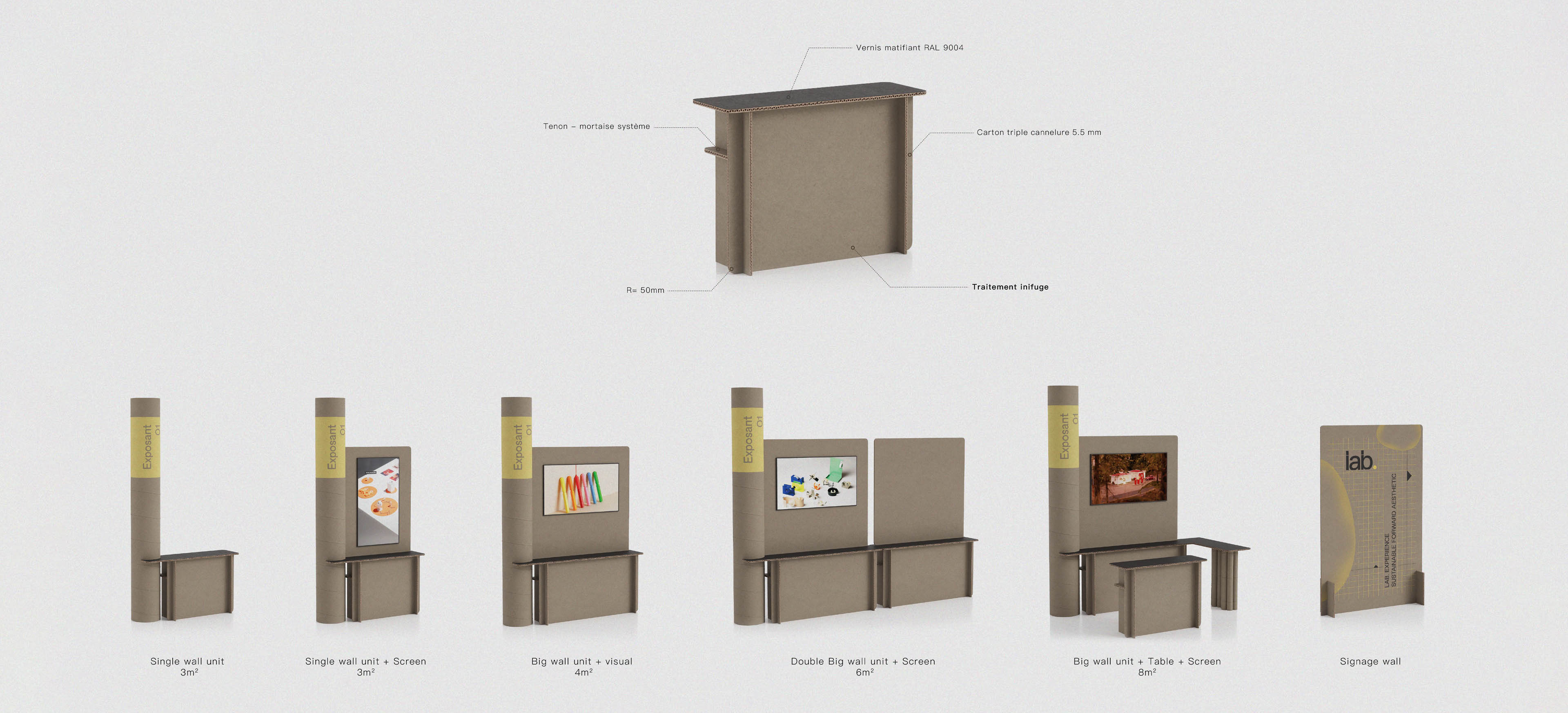
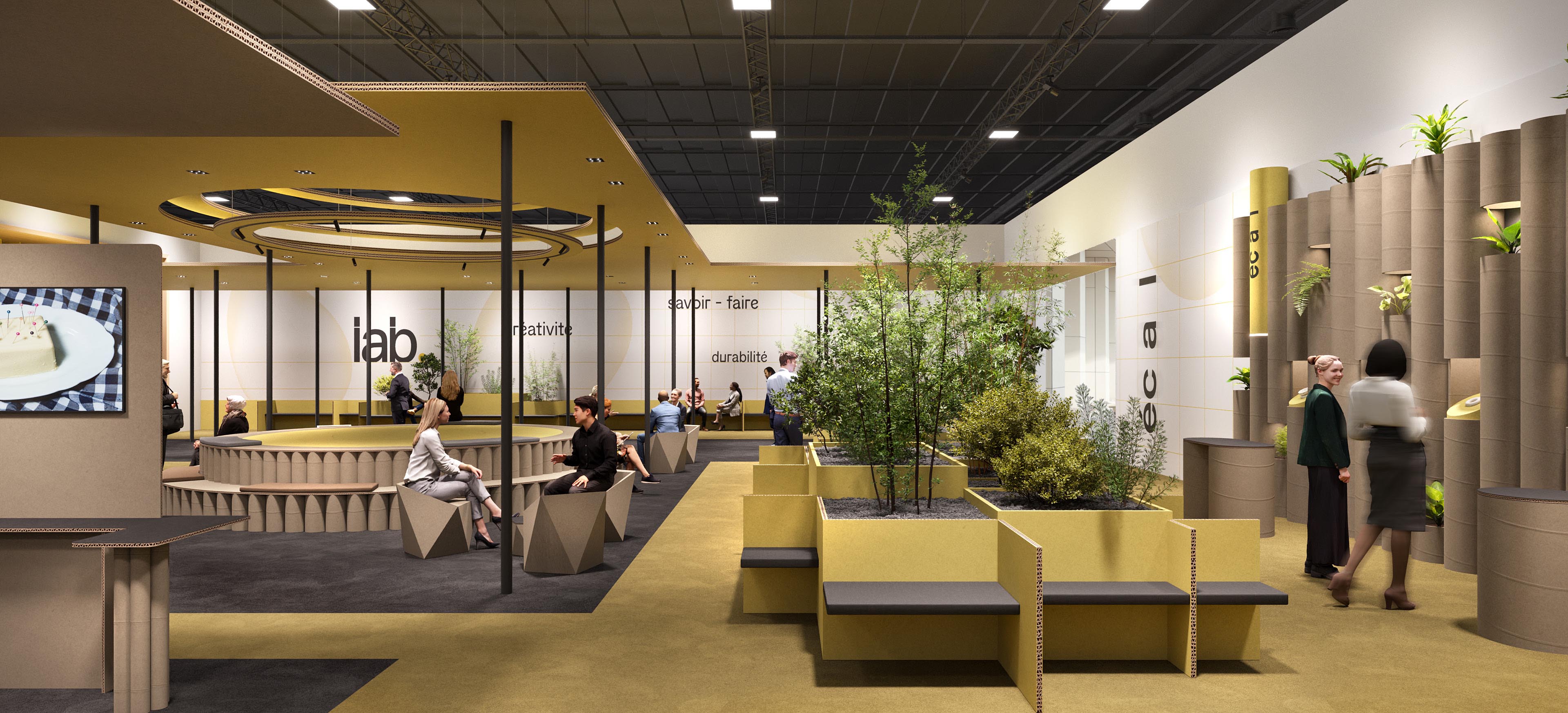
At the heart of the project lies an ambitious material choice: cardboard. Recognized for its recyclability, lightness and adaptability, it becomes the primary architectural component of the exhibition. Rather than concealing its nature, the design celebrates its structural logic and texture, revealing the intelligence behind its assembly. Traditional joinery-inspired systems, such as tenon and mortise connections, allow the structures to be mounted and dismantled efficiently without generating waste. The result is an exhibition architecture that is both robust and ephemeral. Modular walls, fixtures and display elements can easily be adapted to different needs, offering flexibility while maintaining a coherent visual identity. In this context, cardboard is no longer a temporary material — it becomes a symbol of responsible design and innovative thinking.
Material Experimentation
At the heart of the project lies an ambitious material choice: cardboard. Recognized for its recyclability, lightness and adaptability, it becomes the primary architectural component of the exhibition. Rather than concealing its nature, the design celebrates its structural logic and texture, revealing the intelligence behind its assembly. Traditional joinery-inspired systems, such as tenon and mortise connections, allow the structures to be mounted and dismantled efficiently without generating waste. The result is an exhibition architecture that is both robust and ephemeral. Modular walls, fixtures and display elements can easily be adapted to different needs, offering flexibility while maintaining a coherent visual identity. In this context, cardboard is no longer a temporary material — it becomes a symbol of responsible design and innovative thinking.
Material Experimentation
At the heart of the project lies an ambitious material choice: cardboard. Recognized for its recyclability, lightness and adaptability, it becomes the primary architectural component of the exhibition. Rather than concealing its nature, the design celebrates its structural logic and texture, revealing the intelligence behind its assembly. Traditional joinery-inspired systems, such as tenon and mortise connections, allow the structures to be mounted and dismantled efficiently without generating waste. The result is an exhibition architecture that is both robust and ephemeral. Modular walls, fixtures and display elements can easily be adapted to different needs, offering flexibility while maintaining a coherent visual identity. In this context, cardboard is no longer a temporary material — it becomes a symbol of responsible design and innovative thinking.
Modular Exhibition Landscape
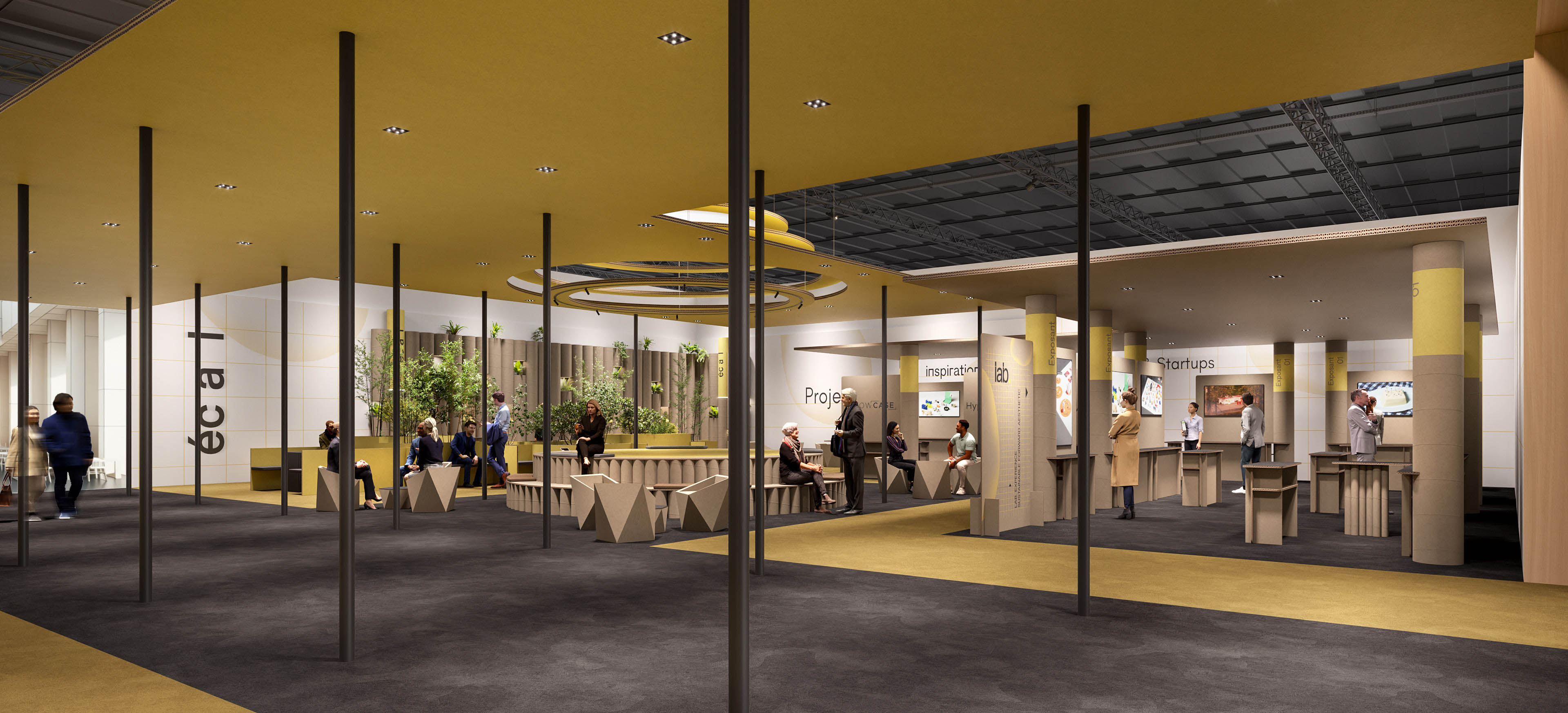
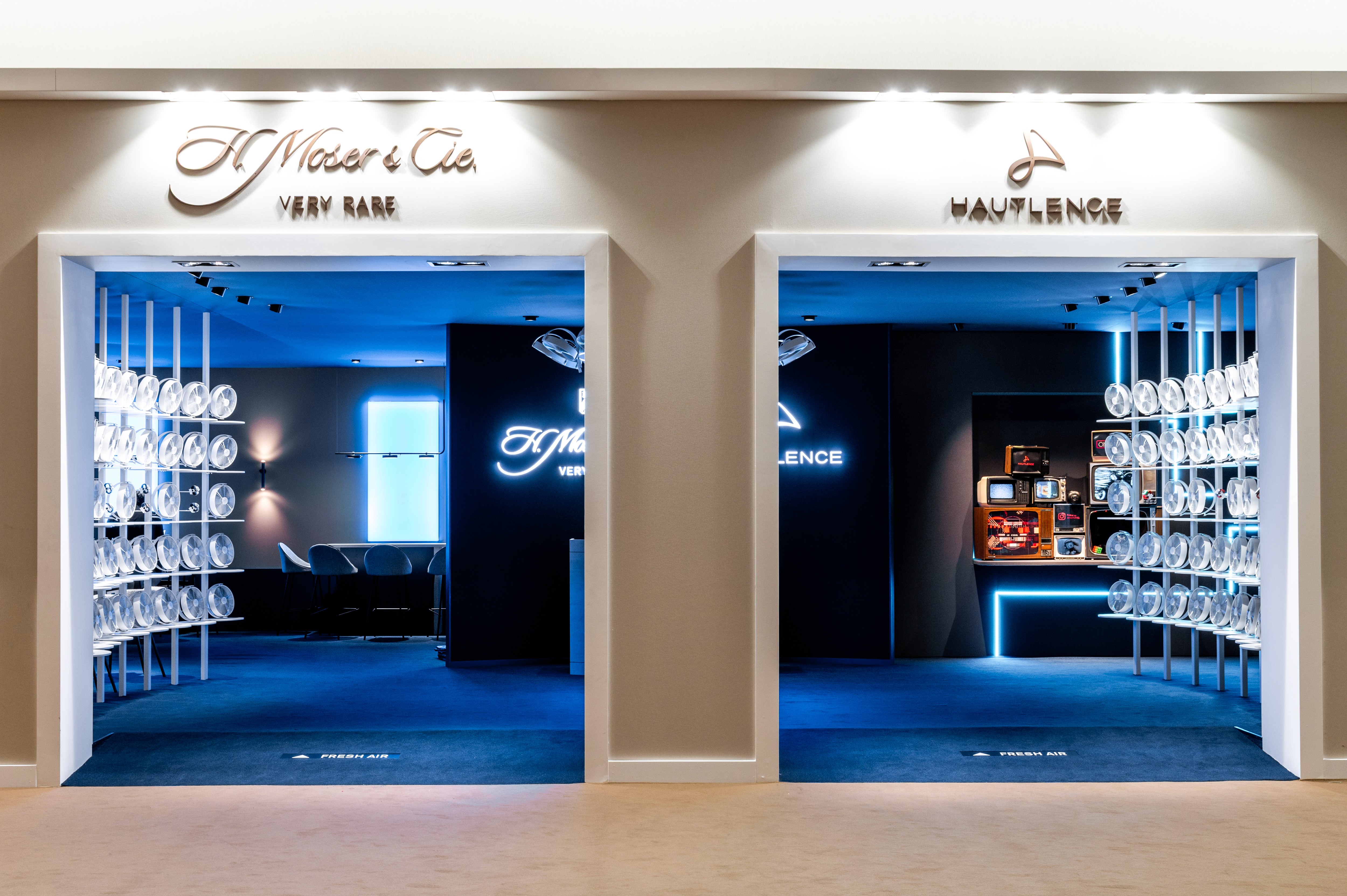
The spatial organization of the LAB is designed as an open landscape where circulation and interaction are encouraged. A central corridor structures the exhibition and guides visitors through the various universes presented by the participating brands and startups. Along this path, modular display units offer multiple configurations, allowing each exhibitor to express their identity while remaining part of a unified architectural language. Beyond the presentation spaces, the exhibition integrates meeting areas, informal lounges and collaborative zones. These environments encourage dialogue between designers, entrepreneurs and visitors, transforming the exhibition into a living platform for exchange and discovery.
Modular Exhibition Landscape
The spatial organization of the LAB is designed as an open landscape where circulation and interaction are encouraged. A central corridor structures the exhibition and guides visitors through the various universes presented by the participating brands and startups. Along this path, modular display units offer multiple configurations, allowing each exhibitor to express their identity while remaining part of a unified architectural language. Beyond the presentation spaces, the exhibition integrates meeting areas, informal lounges and collaborative zones. These environments encourage dialogue between designers, entrepreneurs and visitors, transforming the exhibition into a living platform for exchange and discovery.
Modular Exhibition Landscape
The spatial organization of the LAB is designed as an open landscape where circulation and interaction are encouraged. A central corridor structures the exhibition and guides visitors through the various universes presented by the participating brands and startups. Along this path, modular display units offer multiple configurations, allowing each exhibitor to express their identity while remaining part of a unified architectural language. Beyond the presentation spaces, the exhibition integrates meeting areas, informal lounges and collaborative zones. These environments encourage dialogue between designers, entrepreneurs and visitors, transforming the exhibition into a living platform for exchange and discovery.
Collective Experience
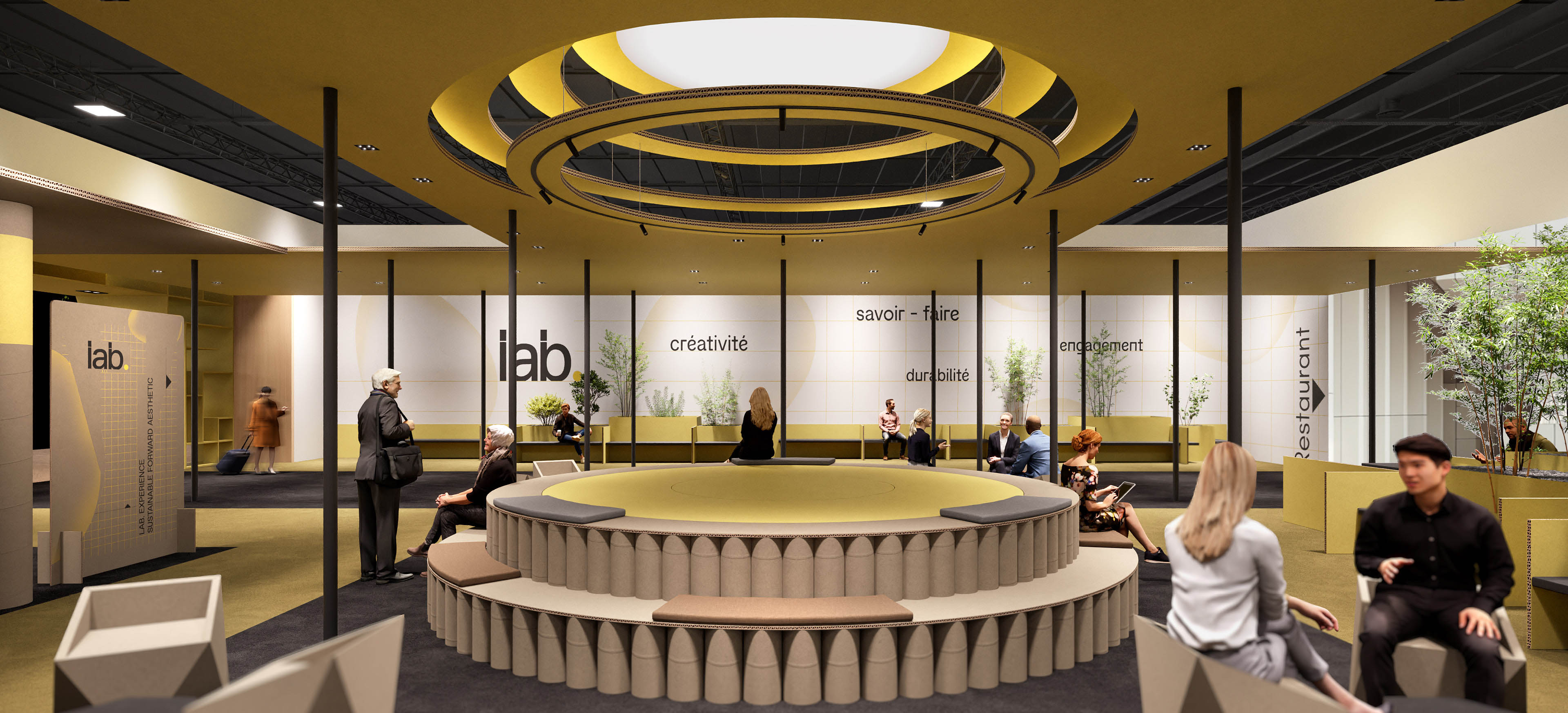
The LAB is conceived not only as an exhibition, but as a dynamic place of encounter. At its center, a multifunctional stage becomes the social heart of the project. Designed to host conferences, presentations and evening events, the space evolves throughout the day, adapting to different rhythms and audiences. A striking overhead chandelier acts as both a visual landmark and a lighting system, reinforcing the identity of the LAB. Around this central hub, relaxation areas, meeting tables and a convivial bar create opportunities for informal discussions and networking. By combining presentation, experimentation and social interaction, the project transforms the traditional exhibition format into a vibrant and collaborative experience.
Collective Experience
The LAB is conceived not only as an exhibition, but as a dynamic place of encounter. At its center, a multifunctional stage becomes the social heart of the project. Designed to host conferences, presentations and evening events, the space evolves throughout the day, adapting to different rhythms and audiences. A striking overhead chandelier acts as both a visual landmark and a lighting system, reinforcing the identity of the LAB. Around this central hub, relaxation areas, meeting tables and a convivial bar create opportunities for informal discussions and networking. By combining presentation, experimentation and social interaction, the project transforms the traditional exhibition format into a vibrant and collaborative experience.
Collective Experience
The LAB is conceived not only as an exhibition, but as a dynamic place of encounter. At its center, a multifunctional stage becomes the social heart of the project. Designed to host conferences, presentations and evening events, the space evolves throughout the day, adapting to different rhythms and audiences. A striking overhead chandelier acts as both a visual landmark and a lighting system, reinforcing the identity of the LAB. Around this central hub, relaxation areas, meeting tables and a convivial bar create opportunities for informal discussions and networking. By combining presentation, experimentation and social interaction, the project transforms the traditional exhibition format into a vibrant and collaborative experience.
A PROJECT BY ICONIA
The LAB explores a new way of building exhibitions by placing sustainability, experimentation and creativity at the center of the process. Inspired by the idea of a laboratory, the project invites visitors to step inside a space of exploration where materials, ideas and innovations are tested and shared. The entire environment is conceived as a modular ecosystem where brands, startups and designers coexist, exchange and present their work within a flexible and evolving structure. Cardboard becomes the protagonist of the project. Lightweight, recyclable and surprisingly expressive, it is used not only as a construction material but also as a design language.
Exhibition Design
Next
Project
©
Coquie 2026
Studio
Coquie
Turning space into stories you can walk through
Le Lab
The LAB explores a new way of building exhibitions by placing sustainability, experimentation and creativity at the center of the process. Inspired by the idea of a laboratory, the project invites visitors to step inside a space of exploration where materials, ideas and innovations are tested and shared. The entire environment is conceived as a modular ecosystem where brands, startups and designers coexist, exchange and present their work within a flexible and evolving structure. Cardboard becomes the protagonist of the project. Lightweight, recyclable and surprisingly expressive, it is used not only as a construction material but also as a design language.
The LAB explores a new way of building exhibitions by placing sustainability, experimentation and creativity at the center of the process. Inspired by the idea of a laboratory, the project invites visitors to step inside a space of exploration where materials, ideas and innovations are tested and shared. The entire environment is conceived as a modular ecosystem where brands, startups and designers coexist, exchange and present their work within a flexible and evolving structure. Cardboard becomes the protagonist of the project. Lightweight, recyclable and surprisingly expressive, it is used not only as a construction material but also as a design language.
Exhibition Design
Le Lab
Material Experimentation
At the heart of the project lies an ambitious material choice: cardboard. Recognized for its recyclability, lightness and adaptability, it becomes the primary architectural component of the exhibition. Rather than concealing its nature, the design celebrates its structural logic and texture, revealing the intelligence behind its assembly. Traditional joinery-inspired systems, such as tenon and mortise connections, allow the structures to be mounted and dismantled efficiently without generating waste. The result is an exhibition architecture that is both robust and ephemeral. Modular walls, fixtures and display elements can easily be adapted to different needs, offering flexibility while maintaining a coherent visual identity. In this context, cardboard is no longer a temporary material — it becomes a symbol of responsible design and innovative thinking.
Material Experimentation
At the heart of the project lies an ambitious material choice: cardboard. Recognized for its recyclability, lightness and adaptability, it becomes the primary architectural component of the exhibition. Rather than concealing its nature, the design celebrates its structural logic and texture, revealing the intelligence behind its assembly. Traditional joinery-inspired systems, such as tenon and mortise connections, allow the structures to be mounted and dismantled efficiently without generating waste. The result is an exhibition architecture that is both robust and ephemeral. Modular walls, fixtures and display elements can easily be adapted to different needs, offering flexibility while maintaining a coherent visual identity. In this context, cardboard is no longer a temporary material — it becomes a symbol of responsible design and innovative thinking.
Material Experimentation
At the heart of the project lies an ambitious material choice: cardboard. Recognized for its recyclability, lightness and adaptability, it becomes the primary architectural component of the exhibition. Rather than concealing its nature, the design celebrates its structural logic and texture, revealing the intelligence behind its assembly. Traditional joinery-inspired systems, such as tenon and mortise connections, allow the structures to be mounted and dismantled efficiently without generating waste. The result is an exhibition architecture that is both robust and ephemeral. Modular walls, fixtures and display elements can easily be adapted to different needs, offering flexibility while maintaining a coherent visual identity. In this context, cardboard is no longer a temporary material — it becomes a symbol of responsible design and innovative thinking.
Modular Exhibition Landscape
The spatial organization of the LAB is designed as an open landscape where circulation and interaction are encouraged. A central corridor structures the exhibition and guides visitors through the various universes presented by the participating brands and startups. Along this path, modular display units offer multiple configurations, allowing each exhibitor to express their identity while remaining part of a unified architectural language. Beyond the presentation spaces, the exhibition integrates meeting areas, informal lounges and collaborative zones. These environments encourage dialogue between designers, entrepreneurs and visitors, transforming the exhibition into a living platform for exchange and discovery.
Modular Exhibition Landscape
The spatial organization of the LAB is designed as an open landscape where circulation and interaction are encouraged. A central corridor structures the exhibition and guides visitors through the various universes presented by the participating brands and startups. Along this path, modular display units offer multiple configurations, allowing each exhibitor to express their identity while remaining part of a unified architectural language. Beyond the presentation spaces, the exhibition integrates meeting areas, informal lounges and collaborative zones. These environments encourage dialogue between designers, entrepreneurs and visitors, transforming the exhibition into a living platform for exchange and discovery.
Modular Exhibition Landscape
The spatial organization of the LAB is designed as an open landscape where circulation and interaction are encouraged. A central corridor structures the exhibition and guides visitors through the various universes presented by the participating brands and startups. Along this path, modular display units offer multiple configurations, allowing each exhibitor to express their identity while remaining part of a unified architectural language. Beyond the presentation spaces, the exhibition integrates meeting areas, informal lounges and collaborative zones. These environments encourage dialogue between designers, entrepreneurs and visitors, transforming the exhibition into a living platform for exchange and discovery.
Collective Experience
The LAB is conceived not only as an exhibition, but as a dynamic place of encounter. At its center, a multifunctional stage becomes the social heart of the project. Designed to host conferences, presentations and evening events, the space evolves throughout the day, adapting to different rhythms and audiences. A striking overhead chandelier acts as both a visual landmark and a lighting system, reinforcing the identity of the LAB. Around this central hub, relaxation areas, meeting tables and a convivial bar create opportunities for informal discussions and networking. By combining presentation, experimentation and social interaction, the project transforms the traditional exhibition format into a vibrant and collaborative experience.
Collective Experience
The LAB is conceived not only as an exhibition, but as a dynamic place of encounter. At its center, a multifunctional stage becomes the social heart of the project. Designed to host conferences, presentations and evening events, the space evolves throughout the day, adapting to different rhythms and audiences. A striking overhead chandelier acts as both a visual landmark and a lighting system, reinforcing the identity of the LAB. Around this central hub, relaxation areas, meeting tables and a convivial bar create opportunities for informal discussions and networking. By combining presentation, experimentation and social interaction, the project transforms the traditional exhibition format into a vibrant and collaborative experience.
Collective Experience
The LAB is conceived not only as an exhibition, but as a dynamic place of encounter. At its center, a multifunctional stage becomes the social heart of the project. Designed to host conferences, presentations and evening events, the space evolves throughout the day, adapting to different rhythms and audiences. A striking overhead chandelier acts as both a visual landmark and a lighting system, reinforcing the identity of the LAB. Around this central hub, relaxation areas, meeting tables and a convivial bar create opportunities for informal discussions and networking. By combining presentation, experimentation and social interaction, the project transforms the traditional exhibition format into a vibrant and collaborative experience.
A PROJECT BY ICONIA
The LAB explores a new way of building exhibitions by placing sustainability, experimentation and creativity at the center of the process. Inspired by the idea of a laboratory, the project invites visitors to step inside a space of exploration where materials, ideas and innovations are tested and shared. The entire environment is conceived as a modular ecosystem where brands, startups and designers coexist, exchange and present their work within a flexible and evolving structure. Cardboard becomes the protagonist of the project. Lightweight, recyclable and surprisingly expressive, it is used not only as a construction material but also as a design language.
Exhibition Design
Next
Project
©
Coquie 2026
Studio
Coquie
Turning space into stories you can walk through
Le Lab
The LAB explores a new way of building exhibitions by placing sustainability, experimentation and creativity at the center of the process. Inspired by the idea of a laboratory, the project invites visitors to step inside a space of exploration where materials, ideas and innovations are tested and shared. The entire environment is conceived as a modular ecosystem where brands, startups and designers coexist, exchange and present their work within a flexible and evolving structure. Cardboard becomes the protagonist of the project. Lightweight, recyclable and surprisingly expressive, it is used not only as a construction material but also as a design language.
The LAB explores a new way of building exhibitions by placing sustainability, experimentation and creativity at the center of the process. Inspired by the idea of a laboratory, the project invites visitors to step inside a space of exploration where materials, ideas and innovations are tested and shared. The entire environment is conceived as a modular ecosystem where brands, startups and designers coexist, exchange and present their work within a flexible and evolving structure. Cardboard becomes the protagonist of the project. Lightweight, recyclable and surprisingly expressive, it is used not only as a construction material but also as a design language.
Exhibition Design
Le Lab
Material Experimentation
At the heart of the project lies an ambitious material choice: cardboard. Recognized for its recyclability, lightness and adaptability, it becomes the primary architectural component of the exhibition. Rather than concealing its nature, the design celebrates its structural logic and texture, revealing the intelligence behind its assembly. Traditional joinery-inspired systems, such as tenon and mortise connections, allow the structures to be mounted and dismantled efficiently without generating waste. The result is an exhibition architecture that is both robust and ephemeral. Modular walls, fixtures and display elements can easily be adapted to different needs, offering flexibility while maintaining a coherent visual identity. In this context, cardboard is no longer a temporary material — it becomes a symbol of responsible design and innovative thinking.
Material Experimentation
At the heart of the project lies an ambitious material choice: cardboard. Recognized for its recyclability, lightness and adaptability, it becomes the primary architectural component of the exhibition. Rather than concealing its nature, the design celebrates its structural logic and texture, revealing the intelligence behind its assembly. Traditional joinery-inspired systems, such as tenon and mortise connections, allow the structures to be mounted and dismantled efficiently without generating waste. The result is an exhibition architecture that is both robust and ephemeral. Modular walls, fixtures and display elements can easily be adapted to different needs, offering flexibility while maintaining a coherent visual identity. In this context, cardboard is no longer a temporary material — it becomes a symbol of responsible design and innovative thinking.
Material Experimentation
At the heart of the project lies an ambitious material choice: cardboard. Recognized for its recyclability, lightness and adaptability, it becomes the primary architectural component of the exhibition. Rather than concealing its nature, the design celebrates its structural logic and texture, revealing the intelligence behind its assembly. Traditional joinery-inspired systems, such as tenon and mortise connections, allow the structures to be mounted and dismantled efficiently without generating waste. The result is an exhibition architecture that is both robust and ephemeral. Modular walls, fixtures and display elements can easily be adapted to different needs, offering flexibility while maintaining a coherent visual identity. In this context, cardboard is no longer a temporary material — it becomes a symbol of responsible design and innovative thinking.
Modular Exhibition Landscape
The spatial organization of the LAB is designed as an open landscape where circulation and interaction are encouraged. A central corridor structures the exhibition and guides visitors through the various universes presented by the participating brands and startups. Along this path, modular display units offer multiple configurations, allowing each exhibitor to express their identity while remaining part of a unified architectural language. Beyond the presentation spaces, the exhibition integrates meeting areas, informal lounges and collaborative zones. These environments encourage dialogue between designers, entrepreneurs and visitors, transforming the exhibition into a living platform for exchange and discovery.
Modular Exhibition Landscape
The spatial organization of the LAB is designed as an open landscape where circulation and interaction are encouraged. A central corridor structures the exhibition and guides visitors through the various universes presented by the participating brands and startups. Along this path, modular display units offer multiple configurations, allowing each exhibitor to express their identity while remaining part of a unified architectural language. Beyond the presentation spaces, the exhibition integrates meeting areas, informal lounges and collaborative zones. These environments encourage dialogue between designers, entrepreneurs and visitors, transforming the exhibition into a living platform for exchange and discovery.
Modular Exhibition Landscape
The spatial organization of the LAB is designed as an open landscape where circulation and interaction are encouraged. A central corridor structures the exhibition and guides visitors through the various universes presented by the participating brands and startups. Along this path, modular display units offer multiple configurations, allowing each exhibitor to express their identity while remaining part of a unified architectural language. Beyond the presentation spaces, the exhibition integrates meeting areas, informal lounges and collaborative zones. These environments encourage dialogue between designers, entrepreneurs and visitors, transforming the exhibition into a living platform for exchange and discovery.
Collective Experience
The LAB is conceived not only as an exhibition, but as a dynamic place of encounter. At its center, a multifunctional stage becomes the social heart of the project. Designed to host conferences, presentations and evening events, the space evolves throughout the day, adapting to different rhythms and audiences. A striking overhead chandelier acts as both a visual landmark and a lighting system, reinforcing the identity of the LAB. Around this central hub, relaxation areas, meeting tables and a convivial bar create opportunities for informal discussions and networking. By combining presentation, experimentation and social interaction, the project transforms the traditional exhibition format into a vibrant and collaborative experience.
Collective Experience
The LAB is conceived not only as an exhibition, but as a dynamic place of encounter. At its center, a multifunctional stage becomes the social heart of the project. Designed to host conferences, presentations and evening events, the space evolves throughout the day, adapting to different rhythms and audiences. A striking overhead chandelier acts as both a visual landmark and a lighting system, reinforcing the identity of the LAB. Around this central hub, relaxation areas, meeting tables and a convivial bar create opportunities for informal discussions and networking. By combining presentation, experimentation and social interaction, the project transforms the traditional exhibition format into a vibrant and collaborative experience.
Collective Experience
The LAB is conceived not only as an exhibition, but as a dynamic place of encounter. At its center, a multifunctional stage becomes the social heart of the project. Designed to host conferences, presentations and evening events, the space evolves throughout the day, adapting to different rhythms and audiences. A striking overhead chandelier acts as both a visual landmark and a lighting system, reinforcing the identity of the LAB. Around this central hub, relaxation areas, meeting tables and a convivial bar create opportunities for informal discussions and networking. By combining presentation, experimentation and social interaction, the project transforms the traditional exhibition format into a vibrant and collaborative experience.
A PROJECT BY ICONIA
The LAB explores a new way of building exhibitions by placing sustainability, experimentation and creativity at the center of the process. Inspired by the idea of a laboratory, the project invites visitors to step inside a space of exploration where materials, ideas and innovations are tested and shared. The entire environment is conceived as a modular ecosystem where brands, startups and designers coexist, exchange and present their work within a flexible and evolving structure. Cardboard becomes the protagonist of the project. Lightweight, recyclable and surprisingly expressive, it is used not only as a construction material but also as a design language.
Exhibition Design
Next
Project
©
Coquie 2026
Studio
Coquie